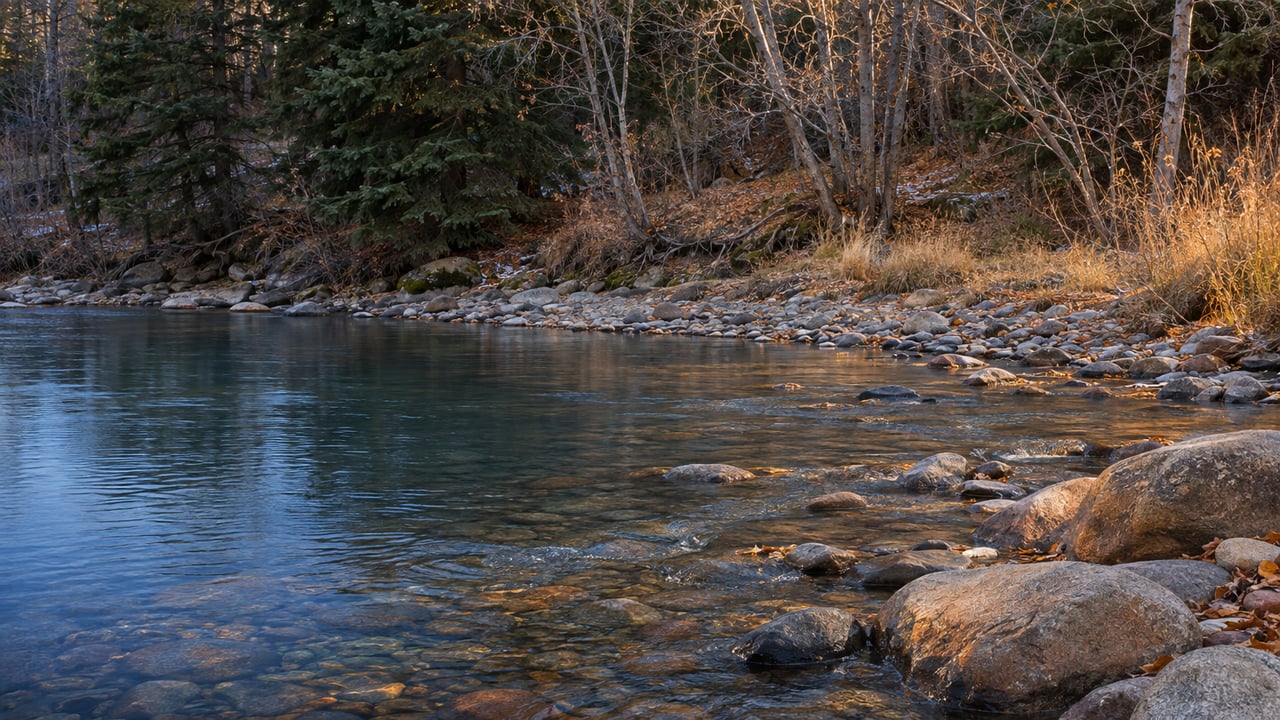
In early August, the Fryingpan below Ruedi Dam was projected to reach 514 cubic feet per second (cfs), fed by drought releases headed for the Grand Valley. On Nov. 9, the USGS gauge near Ruedi read 42.4 cfs. The median for that date is 92 cfs, so the river was running at less than half its usual flow.
Both numbers come from the same decision. In a year with very little snow, Ruedi Reservoir sent its water downstream when western Colorado needed it most. What runs past Basalt this month is the water that's left. The river and the reservoir will live on that remainder until spring runoff in 2027, and Aspen's hydroelectric plant at the dam is expected to stay offline until then.
A Snow Year That Never Filled the Reservoir
The shortfall was visible by spring. In April, Aspen Journalism reported that 2026 snowpack and projected streamflows ranked among the worst on record. Reclamation's spring runoff forecast for Ruedi was 25% of average, and the reservoir was not expected to fill. The same report said the 66,000-acre-foot Historic Users Pool in Green Mountain Reservoir would not fill either. That pool backs Grand Valley users with senior water rights. The report also said the endangered-fish program on the 15-Mile Reach was expected to take shortages.
Ruedi holds water set aside for exactly this situation. The Aspen Times reported in late July that the Colorado Water Trust had a 4,700-acre-foot pool in Ruedi and the Colorado River Water Conservation District a 10,500-acre-foot pool. The Trust's water could go to Grand Valley irrigators, or run through hydropower turbines first and then flow into the 15-Mile Reach for endangered fish.
How August Went Down the Fryingpan
The big releases started Aug. 6. The Aspen Times reported that 100 cfs had been added for Grand Valley irrigators. After two more 50-cfs steps, total Fryingpan releases were projected at 514 cfs. Paula Stepp, executive director of the Ruedi Water and Power Authority, told the paper the changes were tied to an upstream substitution pool that was nearly used up. Grand Valley irrigators had cut their diversions to 1,450 cfs from a typical 1,950 cfs.
The upper valley had some say in how this ran. In the July coverage, Brendon Langenhuizen, technical advocacy director for the River District, said officials would aim to keep flows below 700 cfs and named flooding concerns at around 800 cfs. Aspen Mayor Rachel Richards asked that flows stay between 300 and 350 cfs when possible, and that anglers get notice before quick changes. Rick Lofaro, executive director of Roaring Fork Conservancy, said his group was coordinating those notices with the Roaring Fork Fishing Guide Alliance.
In practice, Basalt's river became a delivery channel for Grand Valley irrigators downstream. That is what Ruedi's contracted water is for. The cost arrives in the fall, when the reservoir has less to give.
Where the Reservoir Stands Now
Reclamation's provisional daily records show the drawdown continued through fall and then flattened out.
- Storage: 39,435.5 acre-feet on Oct. 1. It fell to 37,231 acre-feet on Nov. 1 and stood at 37,565.4 on Nov. 5.
- Daily release: 88.76 cfs on Oct. 1, with a short rise to 116.7 cfs on Oct. 7. It was down to 45.07 cfs by Oct. 20 and 42.15 cfs on Nov. 6.
- Surface elevation: a low of 7,679.43 feet on Nov. 1, then 7,680.26 feet by Nov. 7.
The last two lines go together. With releases held near 42 cfs, the reservoir started gaining again in early November, by under a foot in a week. The low river in Basalt is what lets Ruedi refill, slowly.
Comparing the same calendar date in other dry years shows how low that is. Here is the surface elevation on Oct. 31 in each year, from Reclamation's Ruedi elevation series:
| Year | Ruedi elevation, Oct. 31 | 2026 compared |
|---|---|---|
| 2002 | 7,696.96 ft | 17.20 ft lower in 2026 |
| 2018 | 7,717.20 ft | 37.44 ft lower in 2026 |
| 2021 | 7,713.60 ft | 33.84 ft lower in 2026 |
| 2026 | 7,679.76 ft |
Even in the dry fall of 2002, the reservoir sat about 17 feet higher on Oct. 31 than it did this year. A Citizen Portal summary of the Oct. 26 Aspen City Council session says the Ruedi Water and Power Authority described the reservoir as at its lowest level since it first filled. The same summary says city staff recommended keeping Aspen in Stage 3 drought response while they watch streamflows and winter snowpack.
The Hydro Plant at the Dam Is Waiting Too
The City of Aspen owns the Ruedi Hydroelectric Facility at the dam. A July 2026 council memo puts the minimum elevation for generating power at 7,711 feet. The Nov. 7 reading was 30.74 feet below that line.
The Aspen Times reported in August that operators took the generating unit offline on Aug. 4. They had seen unusual electrical readings while it ran at low reservoir levels. Inspections found no electrical, mechanical or structural damage. The city's update put the outage at about 9.9 million kilowatt-hours of lost generation between August 2026 and spring 2027. Aspen is buying replacement power through the Municipal Energy Agency of Nebraska, at an estimated cost of about $710,000. The update also said reservoir levels were expected to stay below the operating threshold through the winter and recover with spring runoff in 2027.
The hydro schedule and the river's winter outlook come from the same forecast. Neither changes much until snowmelt starts filling Ruedi again.
What the River Looks Like From the Bank
On the water, low flow has changed the fishing more than it has ended it. Taylor Creek Fly Shops' Oct. 31 report breaks the river into three sections:
- Upper Fryingpan, from Mile Marker 8 up to the dam. Flow was 45 cfs, rated 7 out of 10. The shop reported that dam releases are coming out of a different chute a few feet from the usual one. The upper two miles are cloudy with bottom sediment.
- Middle Fryingpan, from Mile Marker 4 to Mile Marker 8. Clear water, rated 6 out of 10, with fewer anglers. Midges hatch early and late, and blue-winged olives come off when the wind drops.
- Lower Fryingpan, from Basalt up to Mile Marker 4. Clear, rated 7 out of 10, with flows the shop called low and predictable. Most bugs come off midday, and the blue-winged olives run larger here than near the dam.
Mysis shrimp, the tiny freshwater shrimp that wash out of the reservoir, are still on the menu year-round, and the shop keeps two wader and boot cleaning stations. In its November report, Fly Fishing Outfitters calls November a critical spawning period for brown trout. It asks anglers to take extra care around spawning fish and their gravel nests, called redds.
Until the Snow Comes Back
As of the latest readings, the setup for this winter is clear. Reclamation was releasing about 42 cfs on Nov. 6. The USGS gauge below the dam read under half its median for the date on Nov. 9. The reservoir gained less than a foot in the first week of November and sits about 31 feet short of the level that would restart Aspen's turbines. The city expects that recovery to come with 2027 spring runoff. The snow that falls on the upper Fryingpan basin this winter will decide how fast the reservoir comes back, and that refill will decide how the river through Basalt runs next summer.
Water drives a lot in this valley, from how the Pan fishes in November to what a riverside property is worth. If you have questions about the river or about what water means for a property you own or are considering, Mike Eaton is a valley native and glad to talk it through. Start the conversation.